13th April – Threat Intelligence Report
For the latest discoveries in cyber research for the week of 13th April, please download our Threat Intelligence Bulletin. TOP ATTACKS AND BREACHES The Los Angeles Police Department has reported a dat
For the latest discoveries in cyber research for the week of 13th April, please download our Threat Intelligence Bulletin. TOP ATTACKS AND BREACHES The Los Angeles Police Department has reported a dat
We added a new chapter to our Testing Handbook: a comprehensive security checklist for C and C++ code. We’ve identified a broad range of common bug classes, known footguns, and API gotchas across C an
WhatsApp’s new “Private Inference” feature represents one of the most ambitious attempts to combine end-to-end encryption with AI-powered capabilities, such as message summarization. To make this poss
Mixed Boolean-Arithmetic (MBA) obfuscation disguises simple operations like x + y behind tangles of arithmetic and bitwise operators. Malware authors and software protectors rely on it because no stan
Code coverage is one of the most dangerous quality metrics in software testing. Many developers fail to realize that code coverage lies by omission: it measures execution, not verification. Test suite
This post is adapted from a talk I gave at [un]prompted, the AI security practitioner conference. Thanks to Gadi Evron for inviting me to speak. You can watch the recorded presentation below or downlo
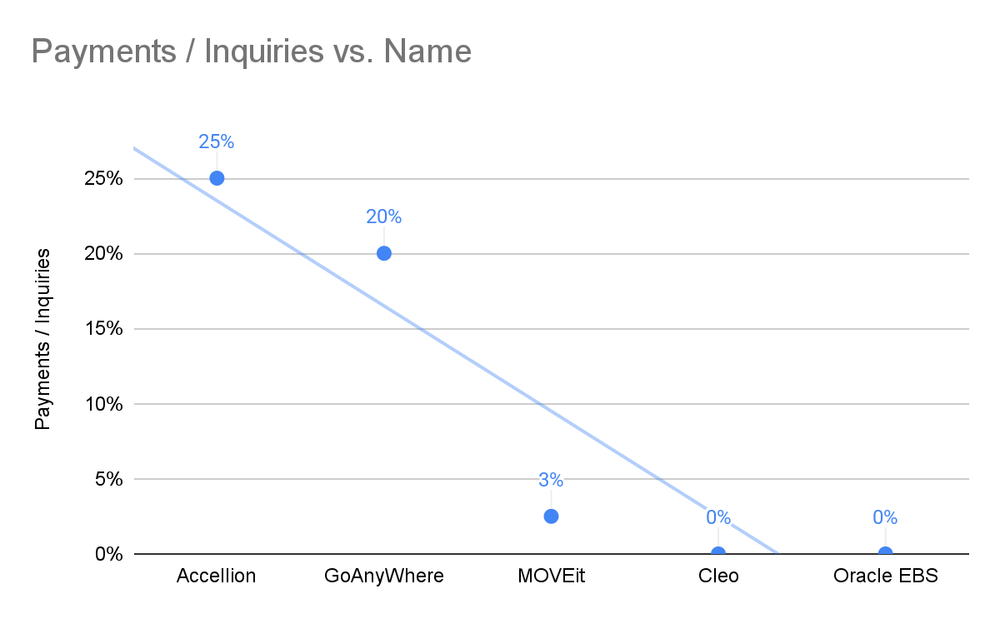
After years of success, it looks as if the era where ransomware gangs could make easy money from data leak extortion might finally have ended. Despite its huge success, extortion-led ransomware is a s
We’re releasing a new Claude plugin for developing and auditing code that implements dimensional analysis, a technique we explored in our most recent blog post. Most LLM-based security skills ask the
Using dimensional analysis, you can categorically rule out a whole category of logic and arithmetic bugs that plague DeFi formulas. No code changes required, just better reasoning! One of the first le
DarkSword, a powerful iPhone-hacking technique, has been discovered in use by Russian hackers.
Iris scan-backed tokens could help stop agent swarms from overwhelming online systems.
Internet-exposed devices that give BIOS-level access? What could possibly go wrong?
Account abstraction transforms fixed “private key can do anything” models into programmable systems that enable batching, recovery and spending limits, and flexible gas payment. But that programmabili
Questions remain as Google prepares to lock down Android app distribution in the name of security.
That guest network you set up for your neighbors may not be as secure as you think.
If you’ve ever done Linux memory forensics, you know the frustration: without debug symbols that match the exact kernel version, you’re stuck. These symbols aren’t typically installed on production sy
Before launching their Comet browser, Perplexity hired us to test the security of their AI-powered browsing features. Using adversarial testing guided by our TRAIL threat model, we demonstrated how fo
Two popular AES libraries, aes-js and pyaes, “helpfully” provide a default IV in their AES-CTR API, leading to a large number of key/IV reuse bugs. These bugs potentially affect thousands of downstrea
Are we seeing the extinction of mass data exfiltration campaigns? The stats demonstrate these attacks are losing their efficacy.
Nitrogen ransomware was derived from the previously leaked Conti 2 builder code, and is similar to Nitrogen ransomware, but a coding mistake in the ESXi malware causes it to encrypt all the files with